Ask your first question in Erode. This guide covers how we turn weather into decisions, how to set up your assets, how to structure a question for the best response, and how to refine your way to a great answer.
Start by asking about a decision you already make, and let Erode do the work.
Erode turns weather into decisions. Instead of combing through raw forecasts, you ask a plain-language question and the Erode Analyst answers it using the latest forecasts for your assets and markets.
Ask the Erode Analyst a plain-language question to get started.
The most valuable first question is one tied to a choice you already make - when to dispatch, how much you can generate, when to spray or mobilize or where prices are heading. The closer your question maps to a real decision, the more useful the answer.
Generation outlook - how much your wind, solar, or hydro assets are likely to produce over the coming hours and days.
Price signals - where market prices are heading, so you can time dispatch and trades.
Risk and extremes - when conditions could swing, so you can plan around volatility before it hits.
Operational opportunities - optimal time windows for operations like spraying fields, mobilizing crews, and anything outdoors.
Setting up your first asset
Connect your portfolio so every answer is grounded in what you actually operate.
Tell Erode what you operate. Adding your assets lets the Analyst ground its answers in your real portfolio rather than generic regional data.
1Ask the chat to help you set it up, or open the Assets area from the main navigation.
2Select Add asset and choose its type - solar, wind, hydro, battery, or load.
3Enter its location and key details, such as capacity, market, and any operating limits.
4Save the asset - it is now available for the Analyst to reference in your questions.
You can ask general questions without configuring any assets, but answers get sharper once Erode knows your locations, capacities, and market.
A few habits that turn a vague prompt into a precise, useful answer.
Be specific - name the asset, location, or market you care about instead of asking in general terms.
Add a timeframe - “tomorrow afternoon” or “the next 48 hours” focuses the answer on the window you are deciding over.
Tie it to a decision - frame the question around the choice you are making, such as dispatch, scheduling, or trading.
Ask one thing at a time - start with a single question, then follow up; it keeps each answer clear and easy to act on.
Use your metrics - ask for answers in the metrics that matter for your decision: revenue increase, cost savings, time savings, and so on.
Example
See what a first question and its answer look like end to end.
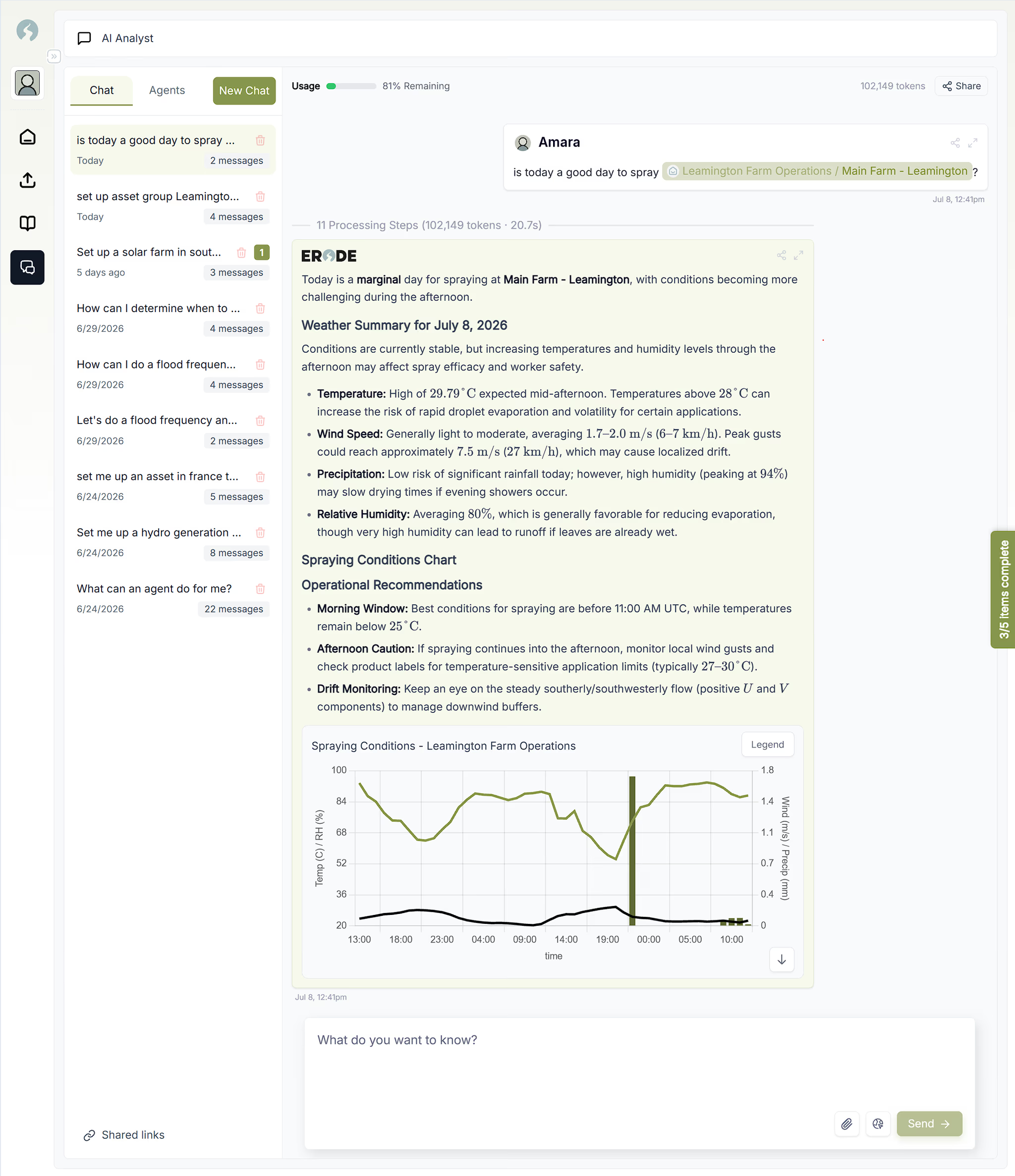
Say you operate a farm near Leamington and want to know whether today is a good day to spray. Rather than piecing together weather feeds yourself, you can ask the Erode Analyst for a data-backed snapshot - and get back the conditions, the risks, and a clear go/no-go read:
A real question and the Analyst’s full answer, end to end.
Or say you operate a solar farm in southern Alberta and want to know what tomorrow looks like. You could ask:
“How much will my Alberta solar farm generate tomorrow afternoon, and how does that compare to the last few days?”
Erode answers with an expected generation range for that window, a short read on the weather driving it - cloud cover, temperature - and a comparison to recent days, so you can see at a glance whether tomorrow is above or below normal.
From there you can follow up - narrow the time window, ask about price, or compare against another asset - and the Analyst keeps the context from your earlier question.
Dig deeper
Your first answer is a starting point - a quick follow-up usually gets you the rest of the way.
A first answer is rarely the finish line. The fastest route to a great answer is a short follow-up that narrows, redirects, or digs into what you just saw - and because the Analyst keeps the context of your conversation, follow-ups can be brief.
Narrow the window - if the answer covers too long a period, ask again for just the hours that matter.
Change one variable - swap the asset, market, or timeframe to compare scenarios side by side.
Ask why - when a number surprises you, ask what is driving it to see the weather behind the forecast.
Push for the decision - end with “so what should I do?” to turn the forecast into a recommendation.
Create a summary report - produce a summary of the analysis and decision for your records or to share.